EN
EN
 FR
FR








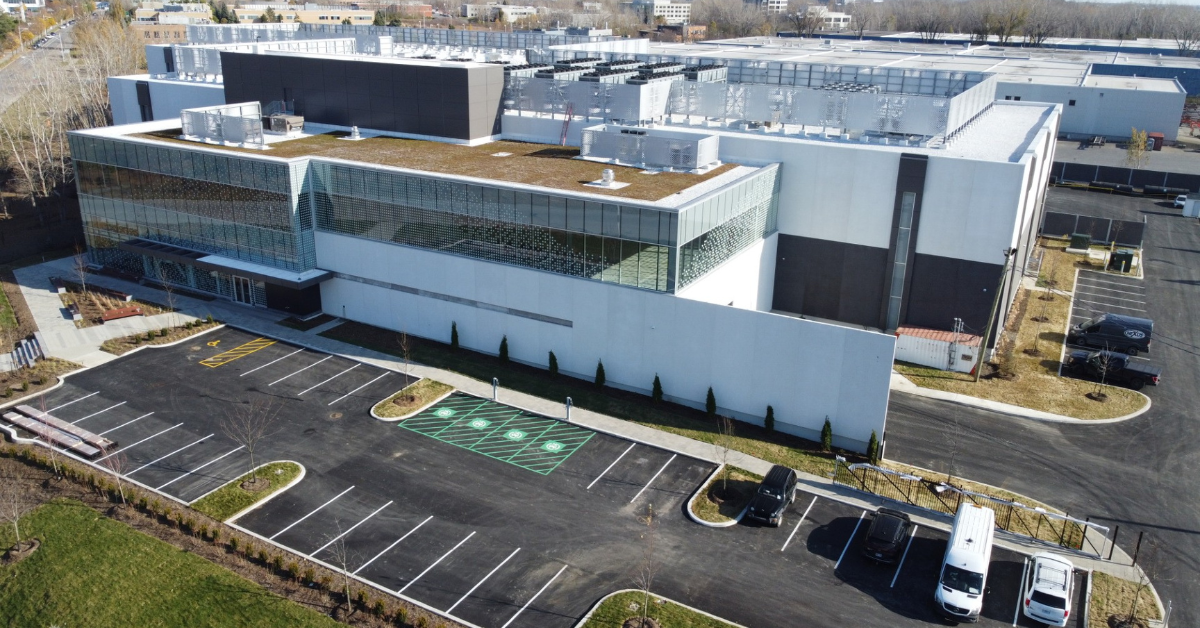
Sean Maskell, President and General Manager of Cologix Canada, recently spoke with RENX about one of the most aggressive data center expansion strategies in the Canadian market. With the recent acquisitions of TOR4 and TOR5 in Toronto – adding a combined 14 megawatts of capacity – Cologix now operates 22 facilities across Montreal, Toronto, and Vancouver, delivering 94 megawatts of power across more than 1 million square feet.
Cologix has established a strategic hub-and-spoke architecture that addresses the most critical challenges facing enterprise organizations today: AI workload requirements and low-latency connectivity. The company’s interconnection ecosystem spans 350 networks, over 200 cloud providers, and 15 public cloud onramps, ensuring enterprises can deploy AI-adjacent infrastructure with minimal latency.
“Data centres in our major markets are forming the critical interconnection infrastructure to enable and accelerate technology innovation,” Maskell explains in the article. This infrastructure-first approach has positioned Cologix to support the next generation of compute-intensive workloads, including the company’s recent GPU-as-a-Service collaboration with Consensus Core at Montreal’s MTL10 facility.
The article also highlights how Cologix is preparing for the future with MTL8′s 21 megawatts coming online in 2025 and continued investment across all three markets. The company achieved 65% carbon-free energy usage in 2024 while expanding square footage by over 40%, demonstrating that scale and sustainability can advance simultaneously.
Maskell emphasizes that Canada’s unique advantages – cooler climate, clean power from sources like Hydro-Quebec, robust data sovereignty laws, and stable regulatory environment – position the country as a global leader in data center infrastructure. For enterprises evaluating AI workloads and latency-sensitive applications, Cologix’s interconnected facilities provide the power, space, and network density required for mission-critical deployments.
FAQs: Cologix’s AI-Ready Infrastructure and Canadian Data Center Expansion
1. How is Cologix addressing AI workload infrastructure requirements in Canada?
According to the article, Cologix is actively positioning itself to serve enterprises seeking “AI-adjacent” infrastructure through GPU-as-a-Service capabilities. Maskell notes that companies want to access GPU resources in a low-cost way as they modernize their operations. The company’s collaboration with AI cloud service provider Consensus Core at Montreal’s MTL10 data center will launch NVIDIA-powered GPU-as-a-Service in the Canadian market, transforming the facility into a hub for high-performance AI workloads. Cologix’s infrastructure is designed to handle the massive parallel processing requirements for AI, machine learning, and 3D rendering applications while maintaining the interconnection enterprises need to efficiently consume that computing power.
2. What is Cologix’s approach to minimizing latency for enterprise applications?
The article explains that Cologix uses a hub-and-spoke architecture across its Canadian markets to deliver low-latency connectivity. In Toronto, the TOR1 facility at 151 Front Street serves as the central interconnection hub—a carrier hotel where networks converge. Facilities like TOR2, TOR3, TOR4, and TOR5 operate as tethered spokes connected back to that hub, allowing enterprises to access hyperscale capacity and high power density in edge locations while maintaining ultra-low latency to Cologix’s interconnection ecosystem of 350 networks and over 200 cloud providers. This same model is replicated in Montreal with 12 facilities and Vancouver with five facilities (soon to be six), ensuring that edge markets remain connected to highly interconnected facilities—critical for AI, cloud, 5G, and content delivery workloads.
3. What power and space capacity does Cologix offer for large-scale enterprise deployments?
The article details Cologix’s substantial capacity across Canadian markets. The company operates 22 data centers across Montreal, Toronto, and Vancouver, providing 1,057,000 square feet of space and 94 megawatts of power. The recent TOR4 and TOR5 acquisitions add 14 megawatts in over 90,000 square feet with significant expansion potential. Montreal’s new MTL8 facility—spanning 205,000 square feet and targeting LEED Gold certification—will deliver 21 megawatts of power when it comes online in 2025, using renewable energy from Hydro-Quebec. Maskell indicates the company has a full growth pipeline across all three markets through both expansion and continued investment in existing facilities, designed to support hyperscalers like AWS and Google Cloud as well as enterprise customers requiring larger footprints with higher power densities.
4. How does Cologix maintain sustainability while rapidly expanding its data center portfolio?
The article highlights Cologix’s strong sustainability performance despite aggressive growth. In 2024, 65 percent of the company’s energy came from carbon-free sources, and emissions intensity remained flat compared to the previous year despite a more than 40 percent increase in square footage. Maskell emphasizes that sustainability has shifted from “nice to have” to “non-negotiable.” MTL8’s cooling system is designed for maximum energy efficiency to optimize functionality while reducing operational energy requirements. The company leverages Canada’s natural advantages—cooler climate acting as natural air conditioning and access to clean power from sources like Hydro-Quebec—to create environmentally responsible infrastructure that meets enterprise ESG requirements without compromising performance or capacity.
5. Why is Canada strategically positioned for enterprise data center infrastructure?
According to Maskell in the article, Canada offers a unique combination of advantages for data center operations. The country’s cooler climate provides natural cooling benefits, reducing energy consumption. Canada also features a stable regulatory environment and strong data sovereignty laws, allowing businesses to keep their information within national borders—a critical consideration for enterprises with compliance requirements. Access to clean, carbon-free energy sources like Hydro-Quebec supports sustainability commitments. The article notes that Vancouver has been one of Cologix’s fastest-growing metros, and the company continues evaluating additional Canadian markets. However, expansion is strategic: new markets must have an “underpinning of interconnection” with substantial fiber concentration to support Cologix’s hub-and-spoke model, ensuring enterprises can access both capacity and connectivity for mission-critical workloads.